Watch · 1 minute
See a critical CVE go from flagged to closed
A new service brings in a critical Go CVE. Drape flags it the same day, gives it an SLA deadline, and closes it on the next clean scan after a coding agent ships the upgrade. Captions are on screen, so it works muted.
Read the transcript
Every scanner can list your vulnerabilities. The hard part is making sure the right ones actually get fixed.
When Diego added a new service, Drape caught the critical CVE it brought in, the same day.
Every CVE gets a deadline from your SLA policy for its severity, so nothing quietly ages out of sight.
Through Drape's MCP server, Claude Code or Codex can pull the open CVEs and ship the fix.
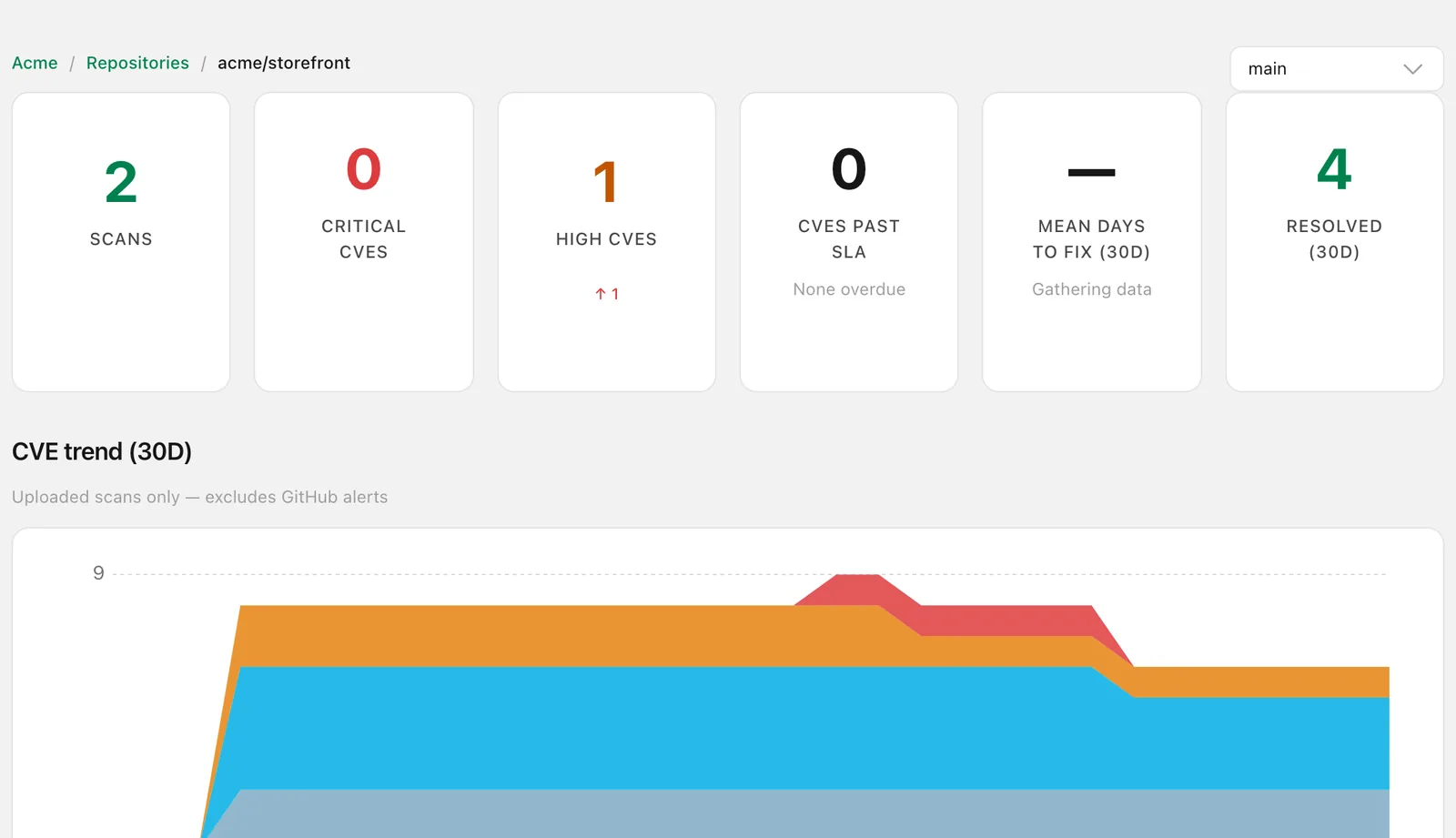
The next clean scan closes it automatically. Fixed in six days, inside its SLA, and the trend shows it.
For the ones that don't apply, suppression is built in. Mark a CVE not affected, risk accepted, or a false positive, with a reason, and its SLA clock stops.
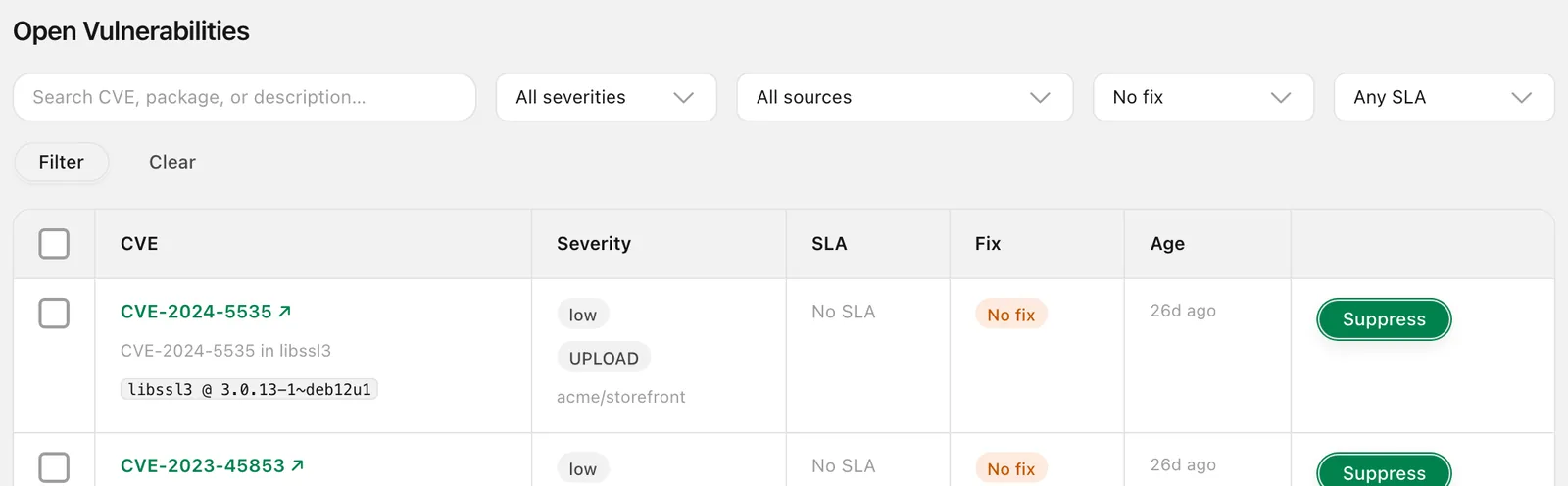
And a CVE with no fix released yet doesn't start an SLA clock at all. One filter shows you everything that's waiting on upstream.
Drape. The CI brain.
Zero CVEs is rare, so the count can’t tell you what to do
87%
of container images carry a high or critical CVE
Nearly every image you ship has one, according to Sysdig. A team that treats them all as urgent burns out and starts ignoring the list.
18%
of critical CVEs stay critical in context
Once you know how the code runs, Datadog found most critical CVEs aren’t. The ones that don’t affect you need a recorded reason, not another look next month.
No fix yet
for most CVEs in a container image
Nobody has released a fixed version yet, so you can’t act on them today. The work for this week is the short list that already has a fix, due first.
From a new critical CVE to the scan that closes it
A developer adds an image-resize sidecar to a demo storefront, and it brings in a critical Go CVE. Every screen below is the Drape product.
Catch
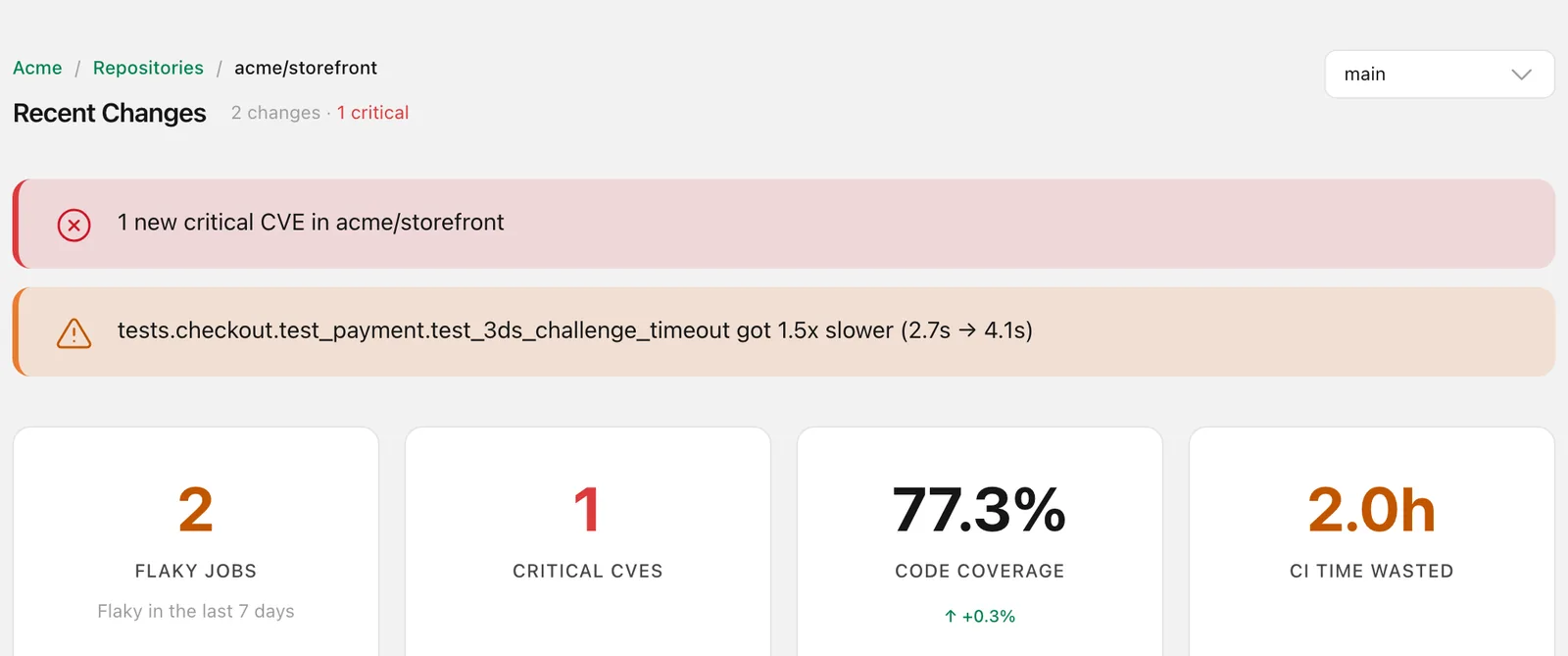
Caught the day it lands
Drape reads the Grype or Trivy scans you already run in CI, alongside your GitHub alerts, and flags a new critical CVE the day it arrives.
Own
Every CVE gets a deadline
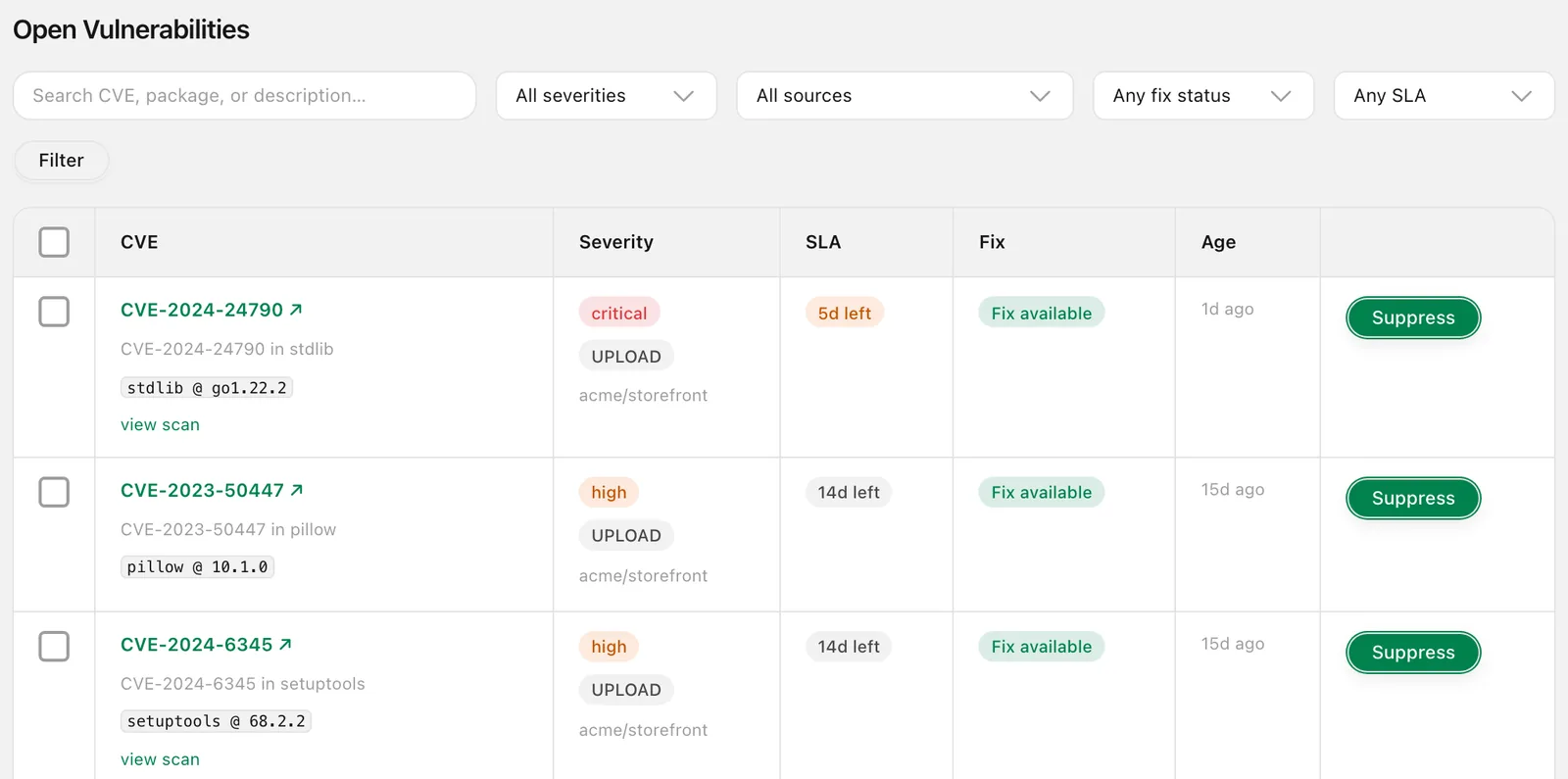
Severity alone doesn’t order the list: a high CVE found a month ago can be due before a critical one found this morning. Each fixable CVE gets a deadline from your SLA policy, counted from the day Drape first saw it, so nothing quietly ages out of sight.
- 7 days for critical and 30 for high, until you set your own
- A pull request fails when a fixable CVE is past its deadline
- Your average days to fix, over the last 30 days
Fix
Your agent ships the upgrade
Through Drape’s MCP server, Claude Code, Cursor or Codex pulls the open CVEs, worst first, with their deadline and whether a fix is available, and ships the upgrade.
~/acme/storefront $ claude
> Fix the critical CVE in our storefront image.

● drape · list_vulnerabilities(severity=["critical"])
  CVE-2024-24790 · critical · SLA 5 days left
  stdlib go1.22.2 in acme/storefront · fix available

● Reading sidecar/Dockerfile
  The image-resize sidecar builds with Go 1.22.2.
  Bumping the builder to 1.22.4.

- FROM golang:1.22.2 AS build
+ FROM golang:1.22.4 AS build
Close
Closed by the next clean scan
Nobody closes a ticket by hand. The next clean scan of your default branch closes the CVE, and an empty or out-of-date scan never does. This one was fixed in six days, inside its SLA, and the trend shows it.
Decide
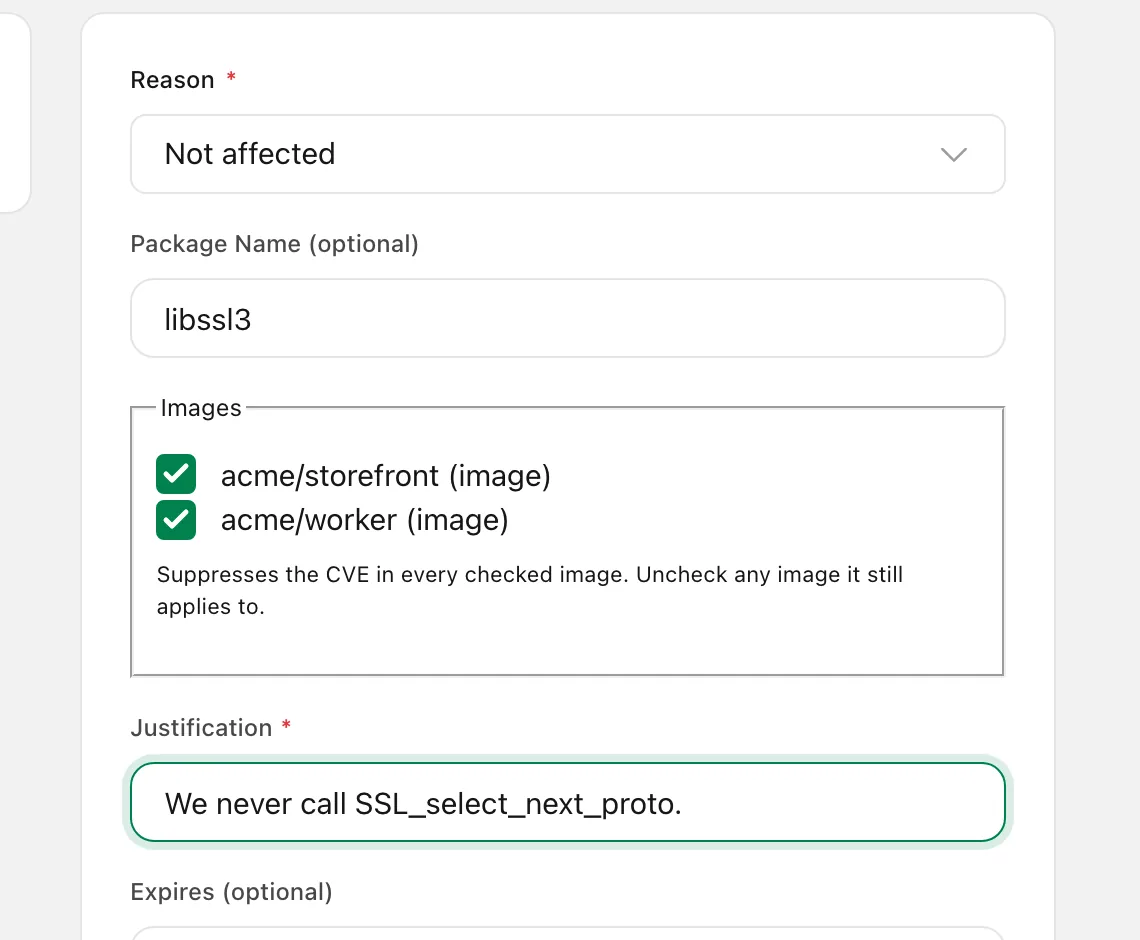
Not affected? Say why
A line in an ignore file hides a CVE forever, and nobody records why. A suppression in Drape is a decision you can check later: who made it, why, and when to look again.
- Not affected, risk accepted, not applicable or a false positive stops the deadline
- Won’t fix or technical debt keeps it running, so a choice to wait stays visible
- Narrow it to a package or an image, with a review interval and a ticket
- When it ends, the CVE reopens and its deadline picks up where it stopped
Wait
No fix released yet? No clock
A CVE with no fixed version doesn’t start an SLA clock, and it never fails a pull request. One filter shows everything that’s waiting on upstream.